

The Revenue Gap Session
Close the Gap Between Effort and Revenue.

you have capable teams who are doing the work.
But the results aren’t lining up the way they should.
Marketing is active, Sales is pushing.
And still—momentum drops somewhere between interest and conversion.
This working session exists to help you identify where that happens and decide what to fix now.

who this is for
This is for Directors, VPs, and Owners in Tech or EdTech who:
Are accountable for revenue or pipeline
Have marketing and sales teams in place
Feel pressure to hit targets this quarter or next
Are tired of “doing more” without seeing better outcomes
You might be saying things like:
“Sales says the leads aren’t ready.”
“Marketing is doing a lot, but it’s hard to connect it to revenue.”
“Deals take too long.”
“We keep educating instead of advancing.”
“Something is breaking between interest and conversion.”
If that sounds familiar, you’re not alone — and you’re not wrong.
who i work with
I work primarily with Tech and EdTech teams—where complex buying journeys, multiple stakeholders, and handoffs between marketing and sales create real revenue friction.
We come together in a focused working session for senior leaders to diagnose an engagement issue and capitalize on a key opportunity.
When executed well, this work injects momentum into the business—turning stalled opportunities into forward motion.
our goal: Align sales and marketing to capture more revenue from the opportunities you already have.

most teams don’t have a lead problem.
They have a readiness problem.
The right buyers are showing up — just not prepared
Sales spends time explaining basics instead of moving deals forward
Website traffic doesn’t turn into meaningful conversations
Marketing spend feels necessary, but hard to defend
Sales and marketing align on big moments, but struggle day to day
The result is quiet friction and missed opportunity — quarter after quarter.

the revenue gap session
This is not a brainstorm.
It’s not a presentation.
And it’s not about fixing everything.
It’s a focused working session to help you:
Identify where momentum drops
Understand what’s slowing revenue down
Agree on the one problem worth solving right now
Decide what will actually help sales convert more consistently
Clarity first. Action second.
Getting clarity sounds simple but it takes the experience to know what to look for to spot gaps and capitalize on opportunity.
This can be a one-time working session or the start of a deeper engagement—depending on what the gap requires.

What we’ll do together
By the end of our session, you will have:
A clear view of where things break between marketing and sales
Insight into what sales is carrying that shouldn’t fall on them
Agreement on the most important problem to address
A practical direction for what to change in the next 60–90 days
Confidence in what to prioritize — and what to ignore
This is about focus, not volume.

Do you have a revenue gap?
The Revenue Gap Assessment
You have enough on your plate, we’re not looking to add more to it. This is a concise assessment to determine whether customer engagement is contributing to your revenue gap.

interpreting the results
If you’ve completed the assessment, the next step is to interpret it in context.
To review this properly, we should discuss it together. Context matters—and a short conversation allows us to interpret your assessment accurately and decide whether there’s a meaningful opportunity to address.
Most revenue gaps aren’t caused by a lack of effort. They’re caused by momentum leaking at predictable moments—after interest is created, before it turns into action.
How I Help Close the Revenue Gap
-
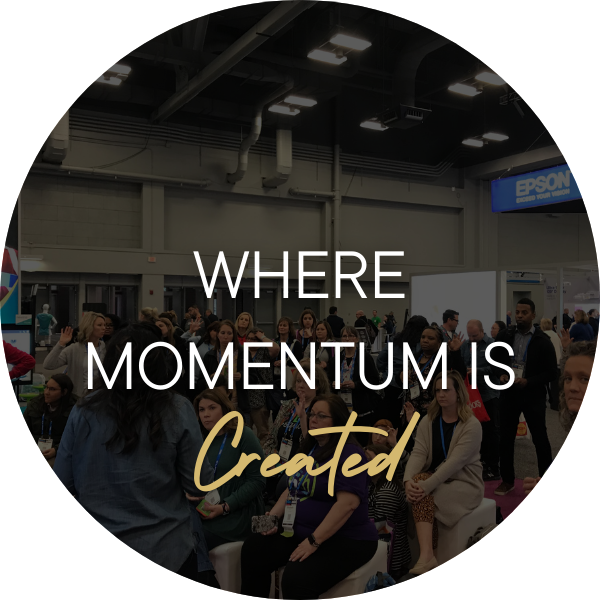
High-leverage moments that amplify effort and accelerate outcomes.
Events | Webinars | Key Initiatives
Across 200+ webinars, 20+ trade shows, and high-impact hosted events, I’ve seen the same patterns repeat—where momentum is created and where it’s quietly lost.That volume matters because it makes gaps visible: where engagement drops, where follow-up breaks down, and where teams assume interest will carry itself forward.
This work applies those patterns diagnostically—so your key initiatives are designed to capitalize on attention, sustain engagement, and support sales follow-through.
That includes hosted events known for standout audience engagement, webinars structured to make conversion feel natural, and value propositions informed by customer research that contributed to 120% of bundled sales targets.
-

Keeping prospects interested, informed, and moving forward after marketing does its job
Sustained Engagement
Interest is captured. Keeping it is where engagement comes in.
Revenue gaps often appear after marketing—when a prospect reaches the demo page, schedules time with sales, or attends an event, then nothing reinforces the connection they just made.
This work focuses on capitalizing on those high-intent moments: continuing to lead the prospect on the demo page, removing friction while prospects wait for sales, and capitalizing on post-demo and post-event moments when engagement is highest.
Addressing this gap has led to 17% increases in right-party contact, 25% close rates, and 120% of sales targets achieved—often with no additional activity. In some cases, strategically designed follow-up has driven 100% email click-through rates, because the conversation was already in motion.
-
Removing friction between teams so interest turns into pipeline.
Sales Enablement | Field Marketing
This work isn’t about being the red phone, reacting to last-minute requests. It’s about guiding teams with systems that work—so marketing earns sales’ trust and keeps it, and sales insight flows back into marketing at scale.That approach has enabled outcomes like:
78 online orders and $400K in revenue driven by online ads and email marketing
90% of reseller-driven sales influenced by coordinated marketing and seller engagement
30% of $3M in revenue initiated through online research, supported by optimized listings, ads, and branded reseller pages
The result is a calmer, more effective operating rhythm: sales focuses on high-value conversations, marketing scales what’s working, and revenue moves more predictably—without heroics.
This work focuses on the moments where momentum is most likely to leak—and designing them so the effort you’re already investing actually carries forward.
Your Revenue Gap Session:
Uncover what’s actually breaking in the buyer journey
Pinpoint the key initiative to capitalize on this quarter
Create a clear path forward—so you know what to do next and how to rally marketing and sales around it
This work doesn’t add more to your plate—it helps you focus the effort you’re already spending.
This work is designed to make things feel clearer and more manageable.
Here’s what that’s looked like for others.
-
![Teq logo - EdTech reseller]()
Peter Kurtz, VP of Marketing, Development, Teq.
“Jen worked on the Teq account to develop go-to-market plans, demand generation strategies, and other customer-facing programs for over six years. Even in her consultative role, she gained a complete understanding of our business and was aligned with our sales goals. She’s an insightful collaborator, and I found that she could balance our traditional marketing needs while sharing innovative approaches to develop new business.”
-
![San Diego CUE logo - San Diego Computer Using Educators]()
Dr. Drew Hinds, Vice President of San Diego CUE.
“We brought Jen in to help drive attendance for the San Diego CUE Powered Learning Fair and received tremendous value. Jen helped us wow our sponsors and speakers, providing opportunities to promote their partnership and equip them with assets to promote to their networks as well. This event was a great success and she was a difference maker.”
-
![Logo of the Calgary Cardinals hockey team featuring a cardinal bird's head with crossed hockey sticks and team name.]()
John Zwicker, Founder, Calgary Cardinals
“We say it all the time, “ We wish we had Jen’s help 4 years ago.” What she has done for our ball club is nothing short of transformational. She built us a full sponsorship program that’s helped bring in real support, took over our website and gave it a clean professional look with content that shows who we really are. Our email newsletter now gets read and clicked by nearly everyone in our list, and our instagram presence has exploded. We hear all the time how professional and sharp it looks. She has taken a huge load off our plates and lets us do what we do best and that is the baseball side of things.”
-
![San Diego CUE logo - San Diego Computer Using Educators]()
Liz Loether, President of San Diego CUE
“It was a great experience working with Jen to promote the San Diego CUE Powered Learning Fair. We achieved our targets for event registration and attendance. Jen supported consistent branding, messaging across social media, email marketing, print materials, and our mainstage presentation slides. Jen brought great ideas to the table while executing on our vision. Her work kept our team organized and made the approval process easy. Our Board saw great benefits working together.”




What to expect in the session
Time and Team Commitment:
A half-day full-focus working session
This works best as a 1:1 or 1:few working session with senior leadership
Complete a short workbook, gathering input from your sales and marketing teams as needed, so we can use our time together effectively
Location:
Your office (travel costs apply for locations outside of Calgary)
Offsite location (venue costs billed at cost)
Virtual
Preparation and Focus
Willingness to look honestly at what’s not converting
Access to both marketing and sales perspectives
Openness to focus on one issue, not everything
All sessions and materials reviewed will remain confidential.
Before the Session
You complete a short audit worksheet
This ensures we work on your reality, not assumptions
During the Session
1:1 working session (virtual or in person)
Structured, candid, and grounded in real conversations
Designed for leaders who need decisions, not theory
After the Session
A clear summary of:
The problem we agreed to solve
Why it matters
What to do next
You’ll leave with a clear decision your team can execute.
how it works
what to expect
Discovery Intro
Identify the options for our focused work: a problem or challenge and/or major opportunity to capitalize on
Problem Identification:
Determine the most critical initiative, process, or moment to focus on this quarter.
Session Outcomes:
A developed strategy which provides your teams with the insight and direction to:
Fix revenue leaks where engagement suffers most
Maximize opportunity in your key initiative this quarter
Unite marketing and sales team members on a focused strategy this quarter
Because the issue isn’t effort.
It’s not talent.
And it’s not motivation.
It’s that the work happening before sales isn’t doing enough of the heavy lifting.
This session helps you decide what needs to change — without blame, noise, or guesswork.
why it works

your move
If nothing changes in the next 90 days:
What does that cost you?
What does it cost your team?
What does it cost your confidence in the numbers?
If you’re ready to close the gap — one decision at a time — this is where to start.
Next steps
Step 1: Take the Revenue Gap Assessment
A concise assessment to determine whether customer engagement is contributing to your revenue gap.
Step 2: Schedule a Review
To review this properly, we should discuss it together. Context matters—and a short conversation allows us to interpret your assessment accurately and decide whether there’s a meaningful opportunity to address.
A short conversation to confirm fit and focus.
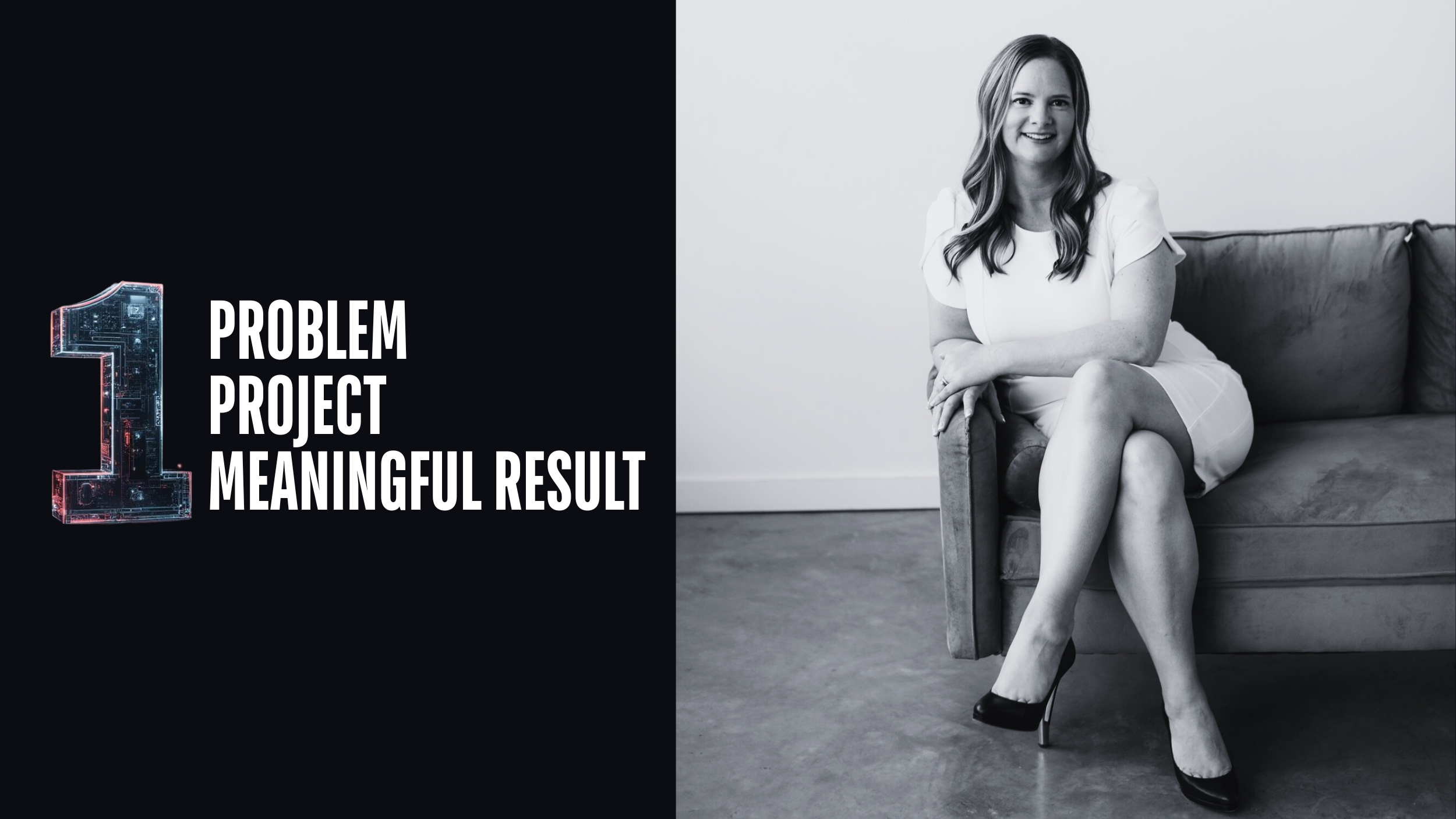
One problem.
One project.
One meaningful result.